
Wind Turbine Repowering: Extending the Life of Existing Wind Assets
As wind turbines age, asset owners face an important decision: continue maintaining the existing machine, refurbish it, decommission the site, or invest in wind turbine repowering.
When the site still has valuable infrastructure, repowering can provide another option. Instead of developing a completely new wind project, an existing turbine can be replaced with modern technology while retaining suitable infrastructure such as foundations, tower components, electrical connections or the existing project footprint.
The right solution, however, depends on the condition of the turbine and infrastructure, wind resource, grid requirements, permitting constraints and project economics.
For owners of aging or orphan wind turbines no longer supported by the original manufacturer, evaluating these factors can reveal whether an existing wind site still has significant operational value.

What Is Wind Turbine Repowering?
Wind turbine repowering is the process of replacing an aging, unsupported or underperforming turbine with newer technology while retaining suitable elements of the existing wind project.
Depending on the site, reusable infrastructure may include the foundation, sections of the tower, electrical feeder, access infrastructure or grid connection.
This differs from refurbishment, which typically keeps the existing turbine and extends its operating life through component, drivetrain or control-system upgrades.
The U.S. Department of Energy defines wind energy repowering as the partial or full retrofit or replacement of existing wind turbines with newer technology rather than fully decommissioning the project.
It also differs from full decommissioning, where the turbine is removed and the site is retired or restored.
For an asset owner, the key question is therefore not simply whether an old turbine can be replaced, but which lifecycle strategy creates the best technical and economic outcome for the specific site.
When Does Wind Turbine Repowering Make Sense?
Repowering should be evaluated on a site-by-site basis.
It may be particularly relevant when:
- the original turbine manufacturer no longer provides support;
- spare parts are becoming difficult to source;
- maintenance requirements or downtime are increasing;
- the existing site has infrastructure that may be suitable for reuse;
- the wind resource remains attractive;
- the grid connection continues to have strategic value;
- modern turbine technology could improve reliability or energy production.
Before proceeding, the condition and compatibility of the existing infrastructure need to be assessed. Structural requirements, electrical systems, permitting, grid compliance and project economics can all influence whether repowering is preferable to refurbishment or decommissioning.
NPS provides wind turbine repowering solutions designed to evaluate aging assets and identify opportunities to reuse suitable existing infrastructure.
A Real Wind Turbine Repowering Project in Boston
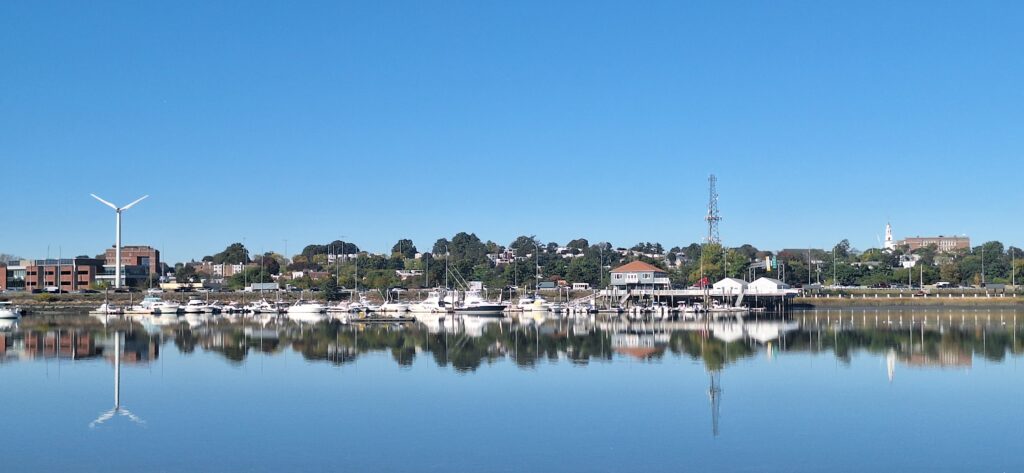
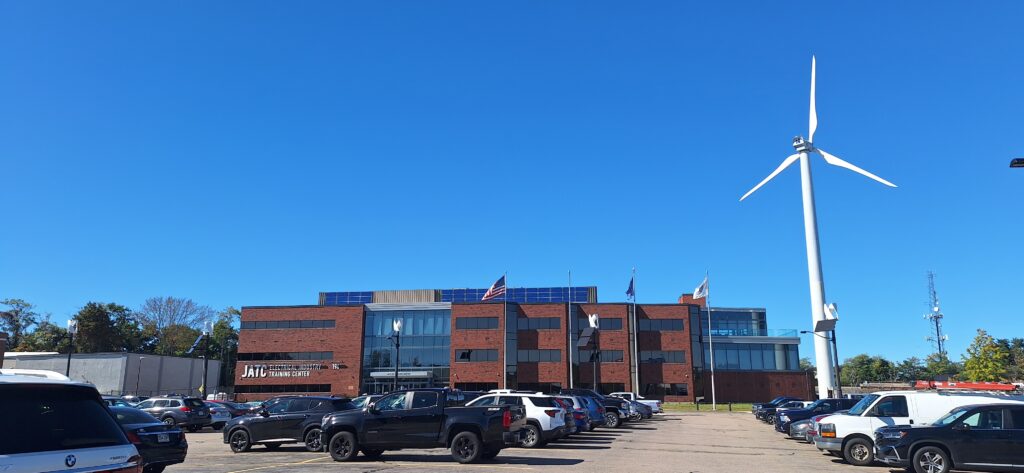
The value of this approach can be seen at the International Brotherhood of Electrical Workers (IBEW) Electrical Industry Training Center in Boston, Massachusetts.
The site had a 100 kW Fuhrländer Astos turbine that had become an orphan wind turbine after the original manufacturer ceased operations.
With OEM support unavailable, spare parts and long-term servicing had become increasingly challenging.
Rather than abandoning an established wind site, the project team evaluated how the existing infrastructure could support a new turbine.
Northern Power Systems, working with Lighthouse Electrical Contracting, developed a customized wind turbine repowering project based on the NPS100C-24.
Read the full IBEW Boston repowering case study for more details on the project, installation and post-repowering performance.
Reusing Existing Infrastructure
One of the most valuable aspects of the Boston project was the ability to engineer the new installation around infrastructure already present at the site.
The project retained:
- the existing concrete foundation;
- the lower tower section;
- the electrical feeder;
- the existing project footprint.
Northern Power Systems designed a custom upper tower section to integrate the NPS100C-24 while maintaining the required overall configuration. The remaining power electronics were replaced with modern equipment.
By preserving suitable existing infrastructure, the project minimized the amount of new site work required.
This illustrates an important principle of wind turbine repowering: the objective is not necessarily to replace everything, but to determine which existing assets can safely and effectively support the next phase of the project.
From Legacy Turbine to NPS100C in Approximately One Week
Once the engineering solution was established, the physical replacement moved quickly.
From removal of the existing turbine through installation and commissioning of the NPS100C, the repowering work was completed in approximately one week.
The new turbine uses Permanent Magnet Direct Drive technology, eliminating the gearbox and providing a modern platform for long-term operation and serviceability.
Performance After Repowering
The most important test of a wind turbine repowering project comes after commissioning.
Between October 2025 and May 2026, the Boston NPS100C generated 96,971 kWh, compared with expected production of 91,332 kWh. During this reporting period, the turbine achieved a 106.2% Performance Factor and 99.9% Operational Availability, with an average wind speed of 4.35 m/s.
These project-specific results show that repowering successfully returned the Boston site to productive operation while integrating a modern turbine into existing infrastructure.
They should not be interpreted as guaranteed performance for other projects: energy production and availability depend on site conditions, turbine configuration, wind resource and operating environment.
Boston Repowering Results
| Metric | Result |
|---|---|
| Energy production | 96,971 kWh |
| Reporting period | Oct. 2025–May 2026 |
| Expected production | 91,332 kWh |
| Performance Factor | 106.2% |
| Operational Availability | 99.9% |
| Average wind speed | 4.35 m/s |
7 Potential Benefits of Wind Turbine Repowering
When technically and economically appropriate, repowering can offer several advantages.
1. Reuse Existing Infrastructure
Suitable foundations, electrical infrastructure, tower components and site access may be retained instead of recreated.
2. Reduce New Civil Works
Reusing existing infrastructure can reduce the amount of construction required compared with developing a completely new wind site.
3. Restore Unsupported Wind Assets
For orphan turbines, wind turbine replacement can provide a path forward when OEM support or spare parts are no longer readily available.
4. Introduce Modern Turbine Technology
Repowering allows an existing site to benefit from newer turbine, control and power-electronics technology.
5. Improve Serviceability
Replacing unsupported equipment with an actively supported platform can simplify long-term service and parts planning.
6. Address Current Grid Requirements
A repowering project provides an opportunity to evaluate the installation against current interconnection and grid-support requirements applicable to the project.
7. Extend the Productive Use of an Existing Wind Site
Instead of retiring a site with established infrastructure and a known wind resource, repowering can begin a new operating phase—subject to engineering, permitting and economic evaluation.
Repowering vs Refurbishment vs Decommissioning
The best strategy depends on the condition and potential of the asset.
| Option | What happens | May be appropriate when |
|---|---|---|
| Repowering | Existing turbine is replaced with newer technology while suitable infrastructure is reused | Existing site retains value but turbine technology is obsolete or unsupported |
| Refurbishment | Existing turbine remains in service with major upgrades or repairs | Core turbine platform remains viable and service-life extension is technically justified |
| Decommissioning | Turbine is removed and the site is retired/restored | Continued operation or reinvestment is no longer technically or economically justified |
A wind asset lifecycle management assessment should consider structural condition, remaining equipment life, wind resource, grid connection, permitting requirements, expected production, maintenance exposure and total project economics before selecting an option.
From Orphan Turbine to Productive Wind Asset
Projects such as the Boston installation are part of the broader distributed wind energy landscape, where turbines can serve on-site energy demand or support local electricity distribution networks.
The Boston project demonstrates why the end of OEM support does not automatically mean the end of a wind site’s useful life.
Through customized engineering, Northern Power Systems integrated an NPS100C-24 with existing infrastructure, completed the physical replacement and commissioning in approximately one week, and returned the site to productive operation.
More importantly, the project provides a practical example of how wind turbine repowering should be approached: not as a standard equipment swap, but as a site-specific engineering decision built around the condition and value of the existing asset.
Explore other NPS wind energy projects to see how distributed wind technology has been applied across different sites and operating environments.
Is Your Wind Turbine a Candidate for Repowering?
If your turbine is aging, unsupported, increasingly difficult to maintain or no longer meeting your project’s requirements, the first step is to evaluate what value remains in the existing site.
Northern Power Systems can assess the existing turbine and infrastructure, project constraints and potential replacement options to determine whether repowering is technically appropriate.