
Discover how a wind turbine for retail can support on-site renewable energy generation, reduce dependence on externally supplied electricity, and strengthen a company’s sustainability strategy.
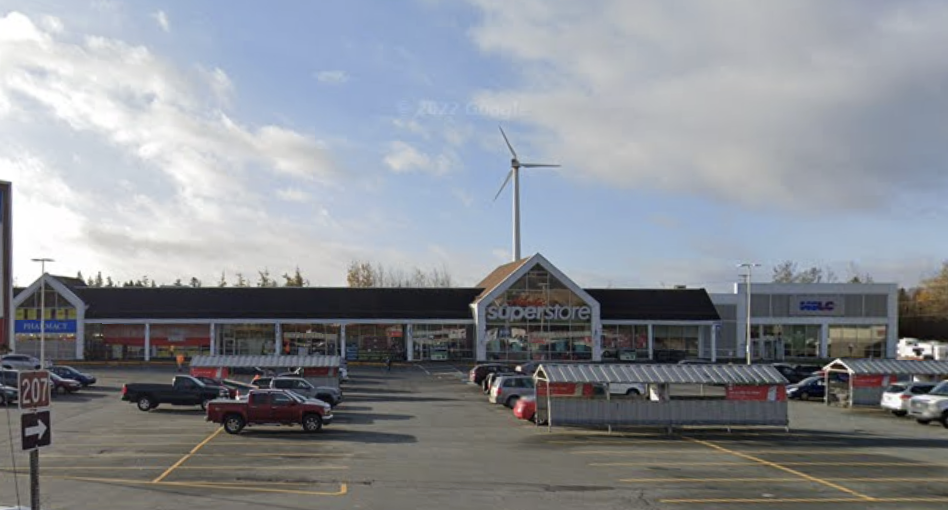
The Atlantic Superstore in Porters Lake, Nova Scotia serves the local community as a convenient destination for groceries and household essentials. Today, customers arriving at the store are greeted by something unusual for a retail site: a community-scale wind turbine rising above the property.
The installation provides a real-world example of how distributed wind energy can be integrated into a commercial environment.
| Application | Retail / Business |
| Location | Porters Lake, Nova Scotia, Canada |
| Wind Turbine | NPS 100-21 |
| Major Load Center | HVAC / Refrigeration |
| Average Wind Speed | 6.6 m/s (14.8 mph) |
| Projected Annual Energy Production | 250,000 kWh |
| Projected Electrical Needs Met | 25% |
| Projected Carbon Emissions Offset | 210 tons annually |
| Planning & Installation Partner | Scotian WindFields, Inc. |
Energy production, percentage of electrical needs met and carbon emissions offset are projected results based on average wind speeds. Actual results may vary. Carbon offset estimate based on EPA eGRID 2007.
A Leader in Sustainable Retail Practices
The Atlantic Superstore is part of Loblaw Companies Limited, one of Canada’s largest food retailers. Over the years, the company has introduced initiatives aimed at reducing the environmental impact of its operations, including energy-efficiency measures, waste reduction and renewable energy projects.
Installing a wind turbine for retail at Porters Lake was a natural extension of this approach, bringing renewable electricity generation directly to the commercial site.
As Dan Roscoe, Chief Operating Officer of Scotian WindFields, Inc., explained:
“Loblaw’s decision to install a wind turbine reflects the growing need for businesses to stabilize energy costs and secure reliable energy sources in the face of rising fuel prices and an uncertain energy future.”

Retail Wind Energy at Atlantic Superstore
Located near the Atlantic coast, Porters Lake benefits from an average wind speed of 6.6 m/s (14.8 mph), making the site well suited for distributed wind generation. The supermarket’s major electrical loads include HVAC and refrigeration, creating significant and consistent electricity demand.
Based on the site’s average wind conditions, the Northwind 100 was projected to generate approximately 250,000 kWh of renewable energy per year, meeting around 25% of the supermarket’s electrical needs. These projected results demonstrate how retail wind energy can contribute meaningfully to the electricity consumption of a commercial facility.
Rather than supplying all of its electricity to the wider grid, the turbine generates power directly for the load customer—an approach sometimes described as an “inside the fence” installation.
The NPS 100-21 Commercial Wind Turbine
The NPS 100-21 community wind turbine was selected to fit naturally into the surrounding environment at Porters Lake. Its low height profile, quiet operation and proven reliability made it particularly suitable for a commercial site located within an active community.
At Atlantic Superstore, the commercial wind turbine operates alongside an active retail facility, generating renewable electricity close to the point where it is consumed without disrupting the surrounding environment or local residents.
This type of distributed generation demonstrates how businesses with suitable sites and wind resources can incorporate renewable energy infrastructure into their existing operations.
Planning and installation partner: Scotian WindFields, Inc.

3 Benefits of a Wind Turbine for Retail
For retailers and other commercial organizations, on-site wind generation can support several strategic objectives.
On-Site Renewable Energy Generation
A wind turbine allows a suitable commercial site to harness its local wind resource and generate part of its electricity directly where that energy is consumed.
Based on average site wind conditions, the Atlantic Superstore installation was projected to produce approximately 250,000 kWh of renewable electricity per year, equivalent to around 25% of the supermarket’s electrical needs.
A Long-Term Energy Strategy
Wind turbines are long-term infrastructure assets. For Atlantic Superstore, the project was conceived not only as a renewable energy investment, but also as part of a long-term strategy to reduce exposure to rising utility costs and increase control over energy sourcing.
For commercial organizations with suitable wind resources and electricity demand, distributed wind can similarly form part of a broader long-term energy strategy.
A Visible Commitment to Sustainability
Many energy-efficiency improvements remain invisible to customers. A wind turbine is different.
At a retail location, the turbine provides a highly visible demonstration of investment in renewable energy. At Atlantic Superstore, customers and the surrounding community can see the renewable energy infrastructure directly at the site.
Wind Energy and Corporate Sustainability
SusThe Atlantic Superstore installation illustrates how a wind turbine in retail can support broader corporate sustainability objectives.
“This project is just another example of Loblaw’s commitment to adopting better environmental practices and how we are taking responsibility for the energy consumption that is required to support our retail business.”
— Mark Schembri, Vice President, Store Maintenance, Loblaw Companies Limited
On-site renewable generation can complement other measures aimed at reducing the environmental impact of commercial operations, while helping businesses diversify the way they source electricity.
For retailers, industrial facilities and other organizations with suitable energy demand and wind conditions, distributed wind can therefore become part of a wider long-term energy strategy.
Projected Environmental Impact
In addition to generating renewable electricity on site, the Atlantic Superstore project was projected to offset approximately 210 tons of carbon emissions annually.
This estimate was calculated using EPA eGRID 2007 data and was based on projected energy production under the site’s average wind conditions. Actual environmental benefits depend on real-world wind resources and electricity generation.
Is a Wind Turbine for Retail Suitable for Every Site?
Not every retail property is suitable for wind generation.
The feasibility of a project depends on several factors, including:
- available wind resource;
- electricity consumption;
- available space and site characteristics;
- local permitting requirements;
- grid connection conditions;
- project economics.
A proper site assessment is therefore essential before determining whether a commercial wind project is technically and economically appropriate.
The Atlantic Superstore project demonstrates what is possible when these conditions align: a community-scale wind turbine integrated into an active retail site, with projected annual generation of approximately 250,000 kWh and the potential to meet around 25% of the supermarket’s electrical needs.
Wind Turbines for Retail and Commercial Applications
The Atlantic Superstore project provides a practical example of how a wind turbine for retail can be integrated into a commercial property.
Northern Power Systems develops distributed wind solutions for commercial, institutional, industrial and other applications, combining decades of experience in wind turbine technology with project-specific energy requirements.
For businesses evaluating on-site renewable generation, the first step is understanding the site’s wind resource, electricity demand and technical requirements.
Explore Wind Energy for Your Business
Considering wind energy for a retail or commercial property?
Explore Northern Power Systems’ Commercial & Institutional applications or contact our renewable energy experts to discuss your project requirements.