
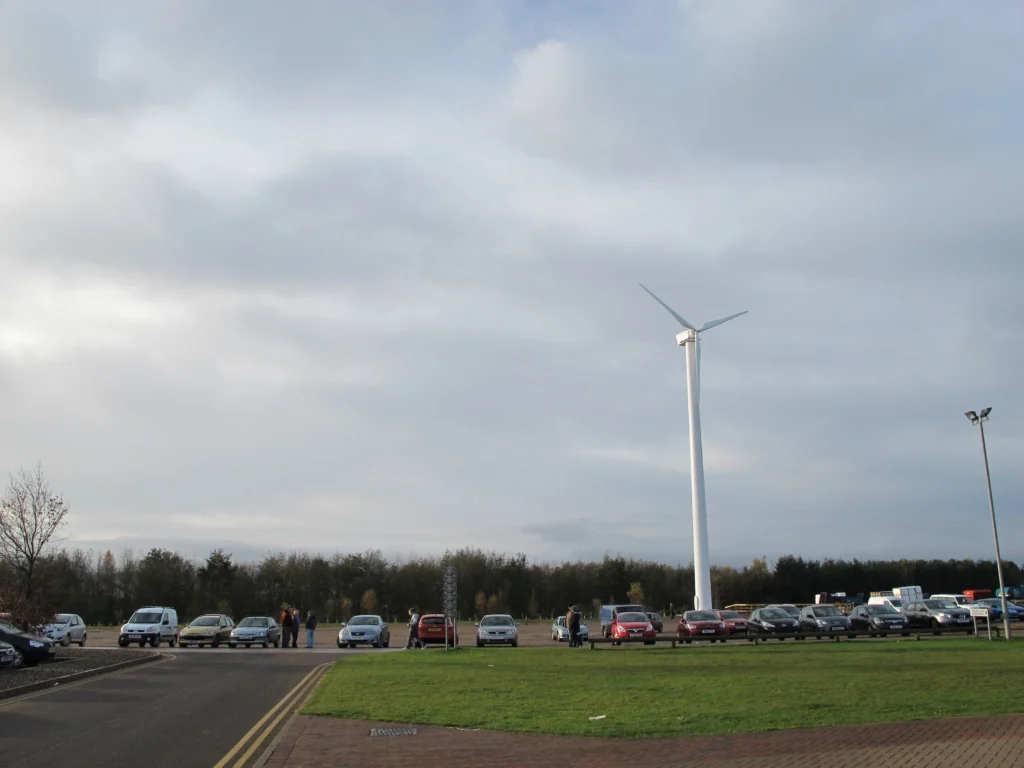
This small wind turbine Scotland project shows how distributed wind energy can provide a reliable and cost-effective source of electricity for an active agricultural and commercial site. At Lanark Auction Market in Scotland’s Clyde Valley, an NPS 100-21 wind turbine generates approximately 192,000 kWh of renewable electricity per year, with around 80% of the energy consumed directly on site.
Lanark has been an important commercial centre for centuries. Today, Lanark Auction Market continues that tradition as a hub serving the local agricultural sector and surrounding communities.
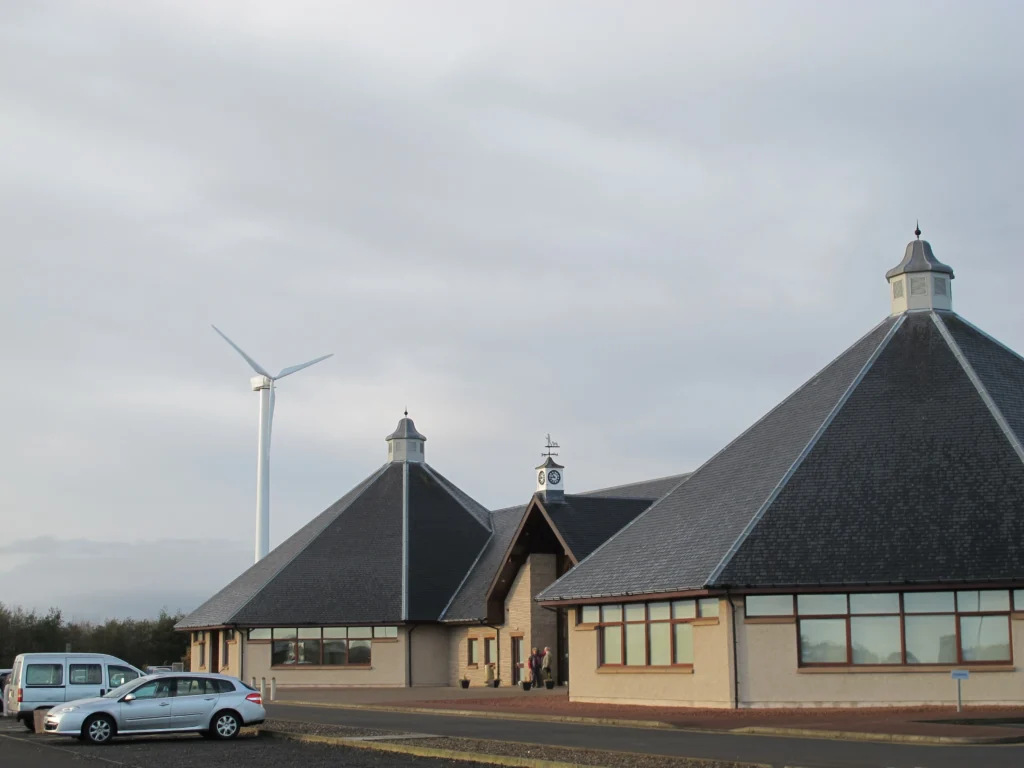
The site combines a livestock market and agricultural centre with offices and event spaces. Major agricultural markets are held twice weekly, while its facilities also accommodate meetings, receptions, trade shows, small animal shows and other activities.
With so many businesses, visitors and activities depending on the site, Lanark Auction Market required a steady, efficient and cost-effective power supply.
Small Wind Turbine Scotland: The Lanark Market Project
Lanark Auction Market investigated renewable energy options with the objective of producing more of its electricity locally.
Through Northern Power Systems partner 3R Energy, which was also an on-site tenant at the office complex, the Market’s operators learned about the NPS wind turbine.
The selected solution was an NPS 100-21 installed on a 37-metre tower.
With an average wind speed of 6.25 m/s, the site offered suitable conditions for distributed wind generation while the turbine’s compact configuration made it appropriate for the commercial and community environment surrounding Lanark Market.

The Northern Power Systems Solution
One of the characteristics behind the selection of the NPS 100-21 was its Permanent Magnetic Direct Drive technology.
Instead of using a traditional gearbox, the NPS design uses a gearless drivetrain engineered to reduce maintenance requirements and improve reliability. According to the original project case study, servicing of the NPS 100 would typically take place once per year, while the gearbox-driven turbines considered in the comparison could require servicing every three to four months.
For a busy agricultural and commercial facility, reducing maintenance requirements means the operators can focus on running the business rather than the wind turbine.
The NPS 100 platform also offered 24/7 monitoring and local service support. At the time of the case study, Northern Power Systems reported fleet availability above 98%.
192,000 kWh from a 100 kW Wind Turbine
The results demonstrate why a 100 kW wind turbine can be an effective distributed energy solution for the right site.
At Lanark Auction Market, the NPS 100-21 produces approximately:
- 192,000 kWh of electricity annually
- 80% of generated electricity consumed on site
- 20% exported to the electricity grid
- 6.25 m/s average site wind speed
Producing electricity directly where it is needed reduces the amount of power the Market needs to import from the grid.
This high level of on-site consumption is particularly relevant for commercial applications because much of the renewable electricity produced by the turbine can be used directly by the facility.
Distributed Wind Energy for Agricultural Businesses
Lanark Auction Market is also a practical example of a wind turbine for agricultural business applications.
Agricultural centres, farms and other rural businesses can have characteristics suited to distributed wind, including available space, exposure to wind and consistent electricity demand.
Northern Power Systems technology is also used in other agricultural applications where on-site renewable generation can complement existing energy infrastructure.
Every project is different, however. Wind resource, energy consumption, grid connection, planning requirements and site characteristics must all be evaluated before determining whether wind energy is appropriate and selecting the correct turbine configuration.
At Lanark, distributed wind energy provides locally generated electricity for a facility that plays an important role in the surrounding agricultural community.
Scotland continues to support the development of onshore wind as a key part of its transition towards a decarbonised energy system.
Commercial and Environmental Benefits
The project was designed to deliver both commercial and environmental value.
Reliability and predictable energy costs were particularly important considerations for Lanark Auction Market. Generating electricity on site can reduce exposure to electricity imported from the grid, while the gearless design of the NPS turbine helps limit maintenance requirements.
The turbine also strengthens the Market’s environmental credentials by supplying renewable electricity to a business closely connected with Scotland’s agricultural and food supply chain.
As Lanark Auction Market Managing Director Hamish McCall explained:
“We’re proud to be part of Scotland’s journey toward decarbonised energy.”
The combination of on-site renewable generation, low-maintenance technology and high energy utilisation makes Lanark Market a strong example of how distributed wind can support commercial and agricultural operations.
Looking for a Distributed Wind Energy Solution?
Northern Power Systems provides wind technology for commercial, agricultural, industrial, remote and distributed energy applications.
If you are evaluating whether a 100 kW wind turbine could support your site’s energy requirements, contact Northern Power Systems to discuss your project and identify the most appropriate solution.