
In today’s evolving agricultural landscape, the concept of a renewable energy farm is becoming increasingly relevant for farms looking to combine agricultural production with more sustainable energy solutions. Blue Spruce Farm in Bridport, Vermont, is a strong example of this approach, integrating both biogas and wind energy into its operations.
The project demonstrates how wind energy for farms can complement other renewable technologies while supporting local energy generation and long-term sustainability.
| Location | Bridport, Vermont, USA |
| Application | Dairy farm / agriculture |
| Wind turbine | Northern Power NPS100-24 |
| Rated power | 100 kW |
| Tower height | 37 m |
| Average wind speed | approximately 5.2 m/s |
| Expected annual energy production | approximately 176,000 kWh |
| Estimated annual carbon offset | 132 tons |
| Installation | March 2013 |
| Energy model | Net metering partnership with Green Mountain Power |
| Major electrical loads | Milking parlor and barn ventilation fans |
From Dairy Production to Renewable Energy Farm
Blue Spruce Farm produces over 4 million gallons of high-quality milk every year, contributing to the production of locally made Cabot Cheese. With approximately 3,000 acres of crops dedicated to feeding its dairy cows, the farm has long played an important role in Vermont’s agricultural economy.
Its transition toward becoming a renewable energy farm began well before the installation of the wind turbine.
In 2006, Blue Spruce Farm became the first farm in Vermont to convert cow manure into electricity using a methane digester. The system generates approximately 2.5 million kWh of electricity annually, turning an agricultural by-product into a valuable source of renewable energy.
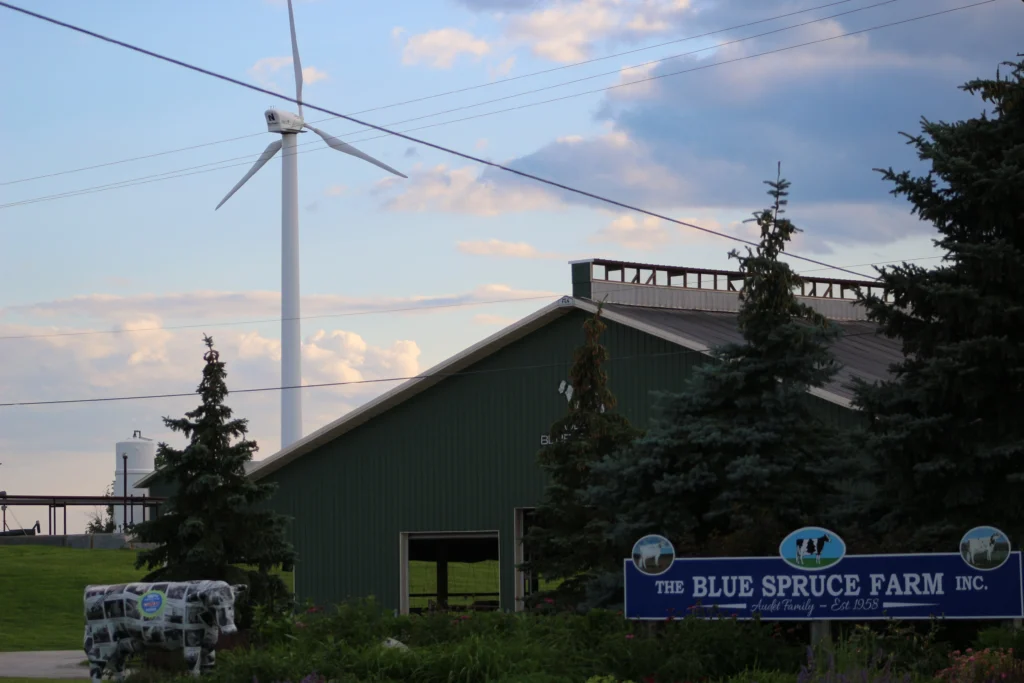
Wind Energy for Farms: The Blue Spruce Project
Building on its experience with biogas, Blue Spruce Farm expanded its renewable energy strategy with wind power.
In March 2013, a Northern Power NPS 100-24 wind turbine was installed at the farm, just one month after ground breaking. The 100 kW turbine was installed on a 37-meter tower, taking advantage of the wind blowing off Lake Champlain.
With an average wind speed of approximately 5.2 m/s at the site, the turbine was expected to produce approximately 176,000 kWh of electricity per year.
The project demonstrates how wind energy for farms can provide an additional source of locally generated renewable electricity while complementing existing agricultural activities.
A 100 kW Wind Turbine for Agriculture
Agricultural facilities can have substantial electricity requirements. At Blue Spruce Farm, major electrical loads include the milking parlor and the barn fans used to circulate air and keep the cows comfortable. Distributed renewable generation can therefore provide an opportunity to produce electricity close to where energy is consumed.
At Blue Spruce Farm, the NPS100-24 provides a practical example of a wind turbine for agriculture integrated into an operating dairy farm.
Through its partnership with Green Mountain Power, the local electric utility and owner of the turbine, Blue Spruce Farm receives a portion of the electricity produced through net metering. This arrangement made the NPS 100 turbine a sound financial decision for both Blue Spruce Farm and Green Mountain Power.
“The Audet family led the way with Cow Power.”
— Mary Powell, President and CEO of Green Mountain Power at the time of the project
Green Mountain Power selected Blue Spruce Farm as a partner for the community-scale wind project because of the Audet family’s previous leadership in renewable energy through Cow Power.

Distributed Wind Energy and Sustainable Agriculture
The Blue Spruce Farm installation is also an example of distributed wind energy: electricity is generated close to the point of use or connected at the distribution level rather than relying exclusively on large centralized wind farms.
According to the U.S. Department of Energy, distributed wind systems can serve local energy needs and are used across agricultural, commercial and community applications.
For agricultural businesses with suitable wind resources, distributed wind can complement other renewable technologies and contribute to a more diversified energy strategy.
At Blue Spruce Farm, wind energy complements the farm’s existing methane digestion system, demonstrating how multiple renewable technologies can coexist within the same agricultural operation.
Sustainability and Community Impact
Blue Spruce Farm’s renewable energy strategy extends beyond electricity generation. The farm is closely connected to the local agricultural economy and the Cabot Cooperative, while its renewable energy projects demonstrate how farming and clean energy technologies can work together.
As a renewable energy farm, Blue Spruce demonstrates how agricultural businesses can:
- support long-term agricultural sustainability.
- diversify their energy sources;
- generate renewable electricity locally;
- integrate wind power with other renewable technologies;
- reduce the environmental impact associated with conventional energy sources;
Reliable Wind Technology for Agricultural Applications
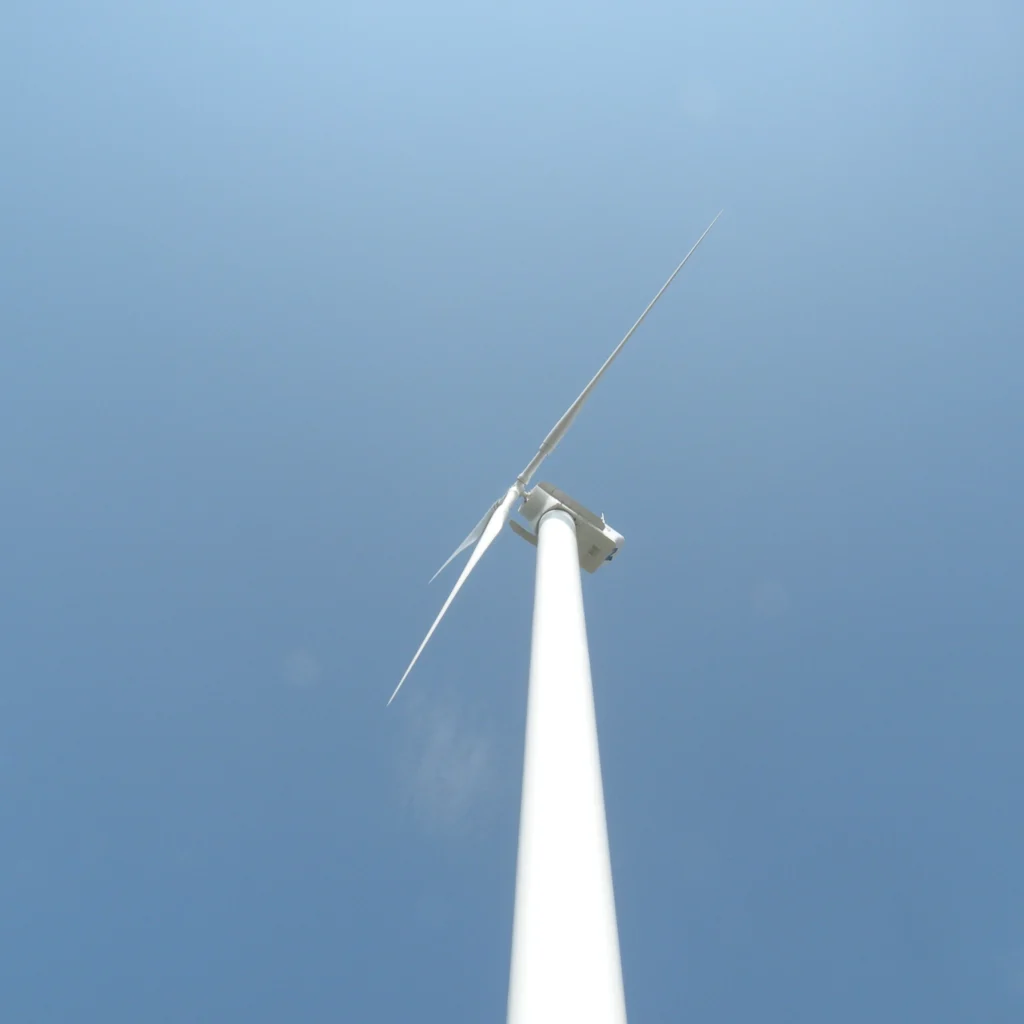
The NPS 100-24 was designed for reliable, low-maintenance operation. Its gearless architecture reduces mechanical complexity, an important consideration for agricultural sites where the turbine must operate alongside day-to-day farming activities.
At the time of the project, Northern Power reported fleet availability of over 98%, supported by 24/7 monitoring and local service. These capabilities provided Blue Spruce Farm with additional confidence in the turbine’s long-term performance.
The Blue Spruce installation shows how a 100 kW wind turbine can be integrated into an active agricultural site while supporting a broader renewable energy strategy.
A Renewable Energy Farm Model for the Future
The Audet family has farmed in Bridport since 1958. Over the years, the family has adopted practices aimed at reducing costs, energy use and waste, while protecting the environment and improving the health and comfort of its cows. Integrating wind energy was therefore a natural extension of an approach to farming that already placed a strong emphasis on sustainability.
From methane digestion to distributed wind generation, Blue Spruce Farm provides a real-world example of how traditional agricultural businesses can integrate modern renewable energy technologies.
The project also highlights an important principle: there is no single solution for creating a renewable energy farm. Depending on local resources, electricity demand and project requirements, technologies such as wind, biogas, solar and energy storage can be integrated into hybrid energy systems.
Conclusion
Blue Spruce Farm demonstrates how agriculture and renewable energy can successfully work together. By combining methane digestion with a Northern Power 100 kW wind turbine, the farm has developed a diversified approach to local renewable electricity generation.
For farms and agricultural businesses evaluating wind power, the project provides a practical example of how wind energy for farms can complement existing operations and other renewable technologies.
Explore Wind Energy Solutions for Agriculture
Are you evaluating wind energy for a farm or agricultural facility?
Northern Power Systems develops wind energy solutions for agricultural, commercial and distributed energy applications. Explore our agricultural applications or contact our team to discuss the technical requirements of your project.