
Newington Farm in Newport-on-Tay, Scotland, installed an NPS 100-21 wind turbine for farm operations to reduce the electricity costs associated with energy-intensive potato cold storage. With 380 acres of potatoes and three cold stores, the family-run farm required a substantial and reliable supply of electricity.
The 100 kW wind turbine provided a way to generate power directly on the farm while exporting surplus electricity to the grid. During its first nine months of operation, the NPS 100-21 generated 150,000 kWh from an average wind speed of 6 m/s.
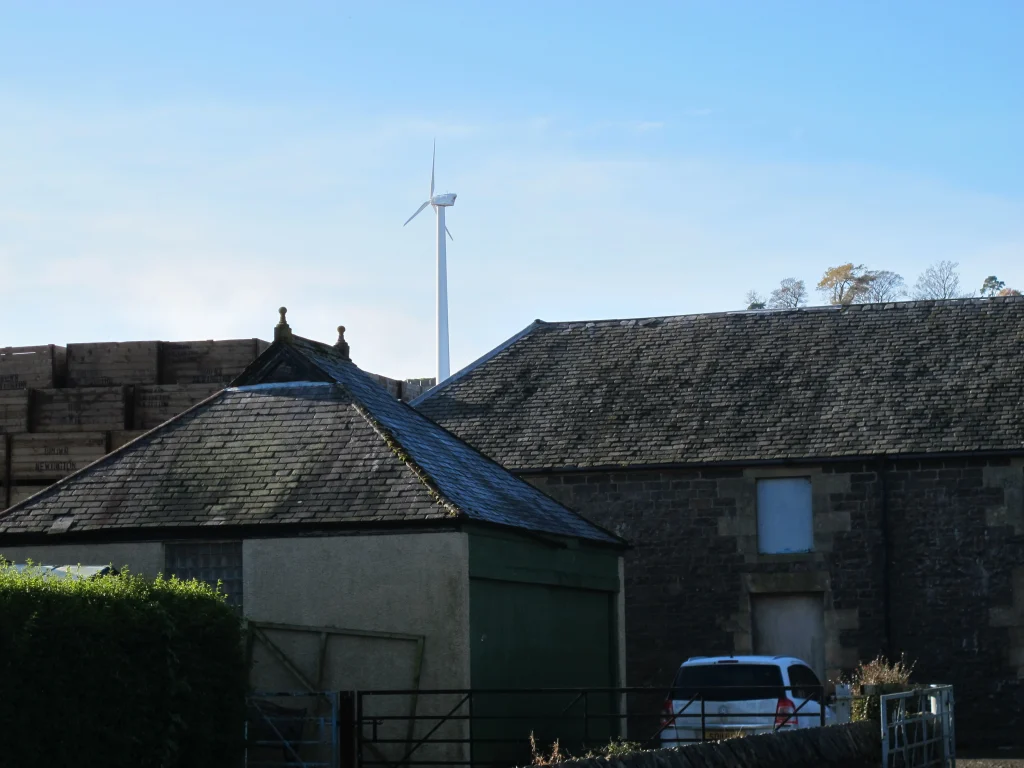
The Challenge: Wind Energy for Farms with High Electricity Demand
Newington Farm is a family-run agricultural business operated by the Brown family. In addition to farming Newington, the family also contract farmed approximately 1,600 acres at the time of the original project.
Its 380 acres of potatoes required significant cold-storage capacity. The potatoes were stored in three cold stores with capacity for approximately 4,500 boxes, making electricity an important operating cost for the business.
The family therefore began investigating whether wind energy for farms could provide a practical way to reduce dependence on electricity purchased from the grid.
The process was unfamiliar territory. As Russell Brown explained in the original project case study:
“We were completely out of our comfort zone with regards to wind speed, kW hours, grid connections and the like so it was important that we asked for help from those with more experience.”
After researching wind power and speaking with other farmers who had installed turbines, the family sought expert support from Scotland’s Rural College (SRUC). SRUC subsequently assisted with the planning process.
The NPS 100-21 Farm Wind Turbine Solution
Situated in a windy area of Scotland, Newington Farm needed a turbine capable of converting the site’s wind resource into electricity for the farm’s operations.
The Brown family selected the NPS 100-21 farm wind turbine, a 100 kW machine based on Northern Power Systems’ Permanent Magnet Direct Drive technology.
Direct Drive Technology
The NPS 100-21 uses a gearless Permanent Magnet Direct Drive design. By eliminating the traditional gearbox, the technology was designed to provide high reliability and reduce the cost of ownership compared with conventional gear-driven turbines.
At the time of the project, the turbine was also supported by a five-year factory warranty, 24/7 monitoring and local service.
Using the Existing Grid Connection
The farm’s existing electrical infrastructure was an important factor in choosing the turbine size.
The Browns established that their existing transformer could accommodate a 100 kW turbine. This avoided the need to replace the transformer simply to install a larger machine.
As Russell Brown explained:
“By this stage we knew that our existing transformer could handle a 100kW turbine, so it would have been silly to look at replacing that in order to get a bigger turbine given the cost involved.”
Planning and Installation
The NPS 100-21’s compact configuration, with a tip height below 40 metres, was suited to the project’s requirements.
Planning permission was obtained in March 2012. The turbine was installed by September and connected to the electricity grid at the beginning of November.
At the time of installation, the project also benefited from the UK’s Feed-in Tariff scheme, allowing eligible electricity generated and exported to the grid to receive tariff payments.
Results: 150,000 kWh in the First Nine Months
The wind turbine for farm operations delivered measurable results shortly after commissioning.
During its first nine months, the NPS 100-21 generated 150,000 kWh of electricity from an average wind speed of approximately 6 m/s.
Despite the farm’s substantial electricity requirements, Newington Farm consumed only just over half of the electricity produced by the turbine during that period. The remaining electricity was exported to the grid.
Reducing Potato Storage Energy Costs
Cold storage represented one of Newington Farm’s major electricity requirements. Generating electricity on-site allowed part of this demand to be supplied directly by the wind turbine rather than entirely through electricity purchased from the grid.
For an agricultural operation exposed to fluctuating operating costs, on-site generation provided another way of controlling a significant business expense.
Projected Seven-to-Eight-Year Payback
At the time of the original case study, Russell Brown expected the project to achieve a payback period of approximately seven to eight years, compared with an expected turbine life of 20 years.
He commented:
“I’m expecting a payback time of seven to eight years, which I’m happy with given its 20-year expected life. It’s doing exactly as Northern Power told me it would.”
The seven-to-eight-year figure represents the owner’s expectation at the time of the original case study rather than a subsequently verified realised ROI.
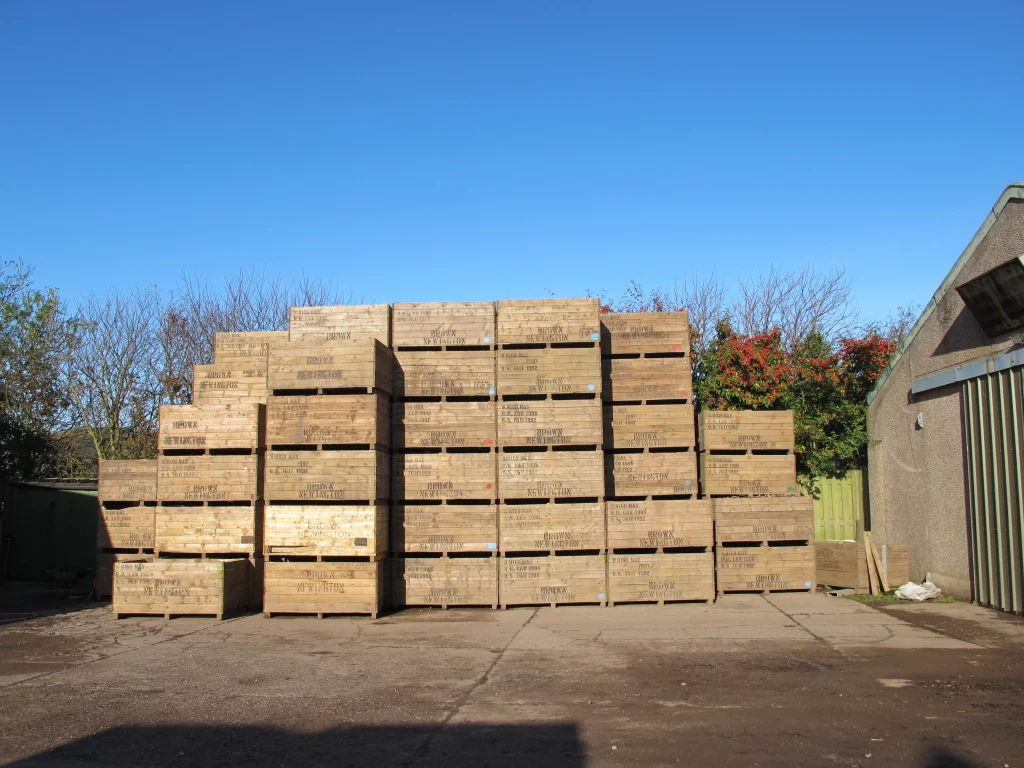
Wind Turbine for Agriculture: Generating Energy Without Giving Up Farmland
The Newington Farm project also demonstrates an important advantage of a wind turbine for agriculture: electricity generation can coexist with normal farming activity.
A turbine occupies only a limited portion of the agricultural site, allowing the surrounding land to remain productive. At Newington Farm, potato production continued alongside other crops including wheat, barley, oats and oilseed rape, as well as sheep farming.
In practical terms, the farm could continue producing agricultural products while also harvesting wind energy from the same site.
What Other Farmers Can Learn from Newington Farm
The experience at Newington Farm highlights several considerations for agricultural businesses evaluating on-site wind generation.
Grid connection capacity should be investigated early, because it can influence the appropriate turbine size and overall project economics. Site wind conditions also need to be assessed, while specialist advice can help navigate technical and planning requirements.
Russell Brown’s recommendation to other farmers was straightforward:
“The first step is to check out your grid connection to see the possibilities, get expert advice, and then shop around for quotes before going ahead.”
For farms with substantial electricity demand, suitable wind conditions and an appropriate grid connection, distributed wind generation can provide a way to produce electricity directly where it is consumed.

Looking for a Wind Energy Solution for Your Farm?
Northern Power Systems develops distributed wind energy solutions for agricultural, commercial and industrial applications.
If your farm has high electricity consumption, suitable wind resources or an existing turbine that needs to be replaced or upgraded, contact Northern Power Systems to discuss your project and evaluate the most appropriate solution for your site.