
Girvan Community Hospital demonstrates how wind energy for healthcare can support critical public services while reducing dependence on purchased electricity. Located in South Ayrshire, Scotland, the hospital uses an NPS 100-21 wind turbine to generate an average of approximately 200,000 kWh of renewable electricity per year, offsetting up to 66% of the facility’s energy demand.
Opened in 2010, Girvan Community Hospital was designed with environmental sustainability as a key consideration. Alongside wind power, the facility incorporates a 700 kW biomass boiler and rainwater collection, creating a broader approach to reducing its environmental impact.
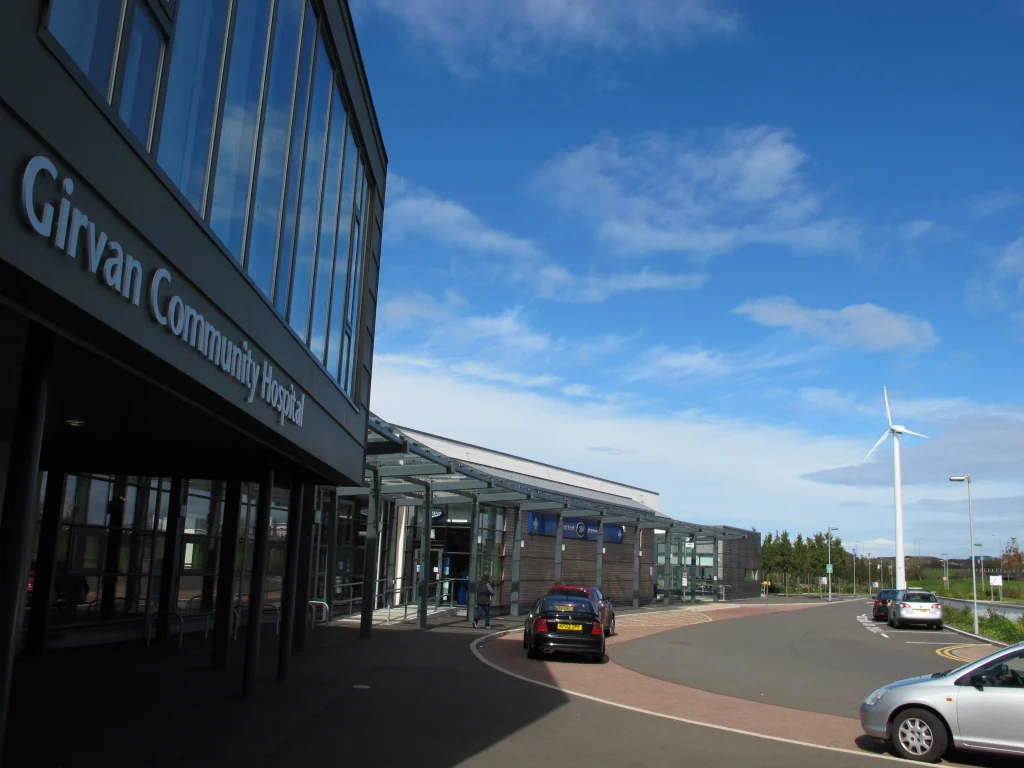
The Challenge: Renewable Energy for a Community Hospital
Girvan Community Hospital is a vital multi-service healthcare hub serving residents and visitors in South Ayrshire. Its facilities include minor injury services, diagnostics, rehabilitation, outpatient services, 26 beds and a Scottish Ambulance Service presence.
Providing these services requires a substantial and reliable energy supply. The hospital consumes more than 350,000 kWh per year, making energy costs and long-term sustainability important considerations.
When NHS Ayrshire and Arran evaluated the development of the new community hospital, environmental factors were incorporated into the site-selection process. A feasibility study identified Girvan as a location with strong potential for wind energy.
The project, however, presented an additional challenge: the average wind speed at hub height was approximately 5 m/s. The hospital therefore required a wind turbine for hospital applications capable of generating electricity effectively even under relatively low-wind conditions.
The Northern Power Systems Solution
The hospital selected an NPS 100-21 wind turbine installed on a 37-metre tower.
At the core of the turbine is Northern Power Systems’ Permanent Magnet Direct Drive (PMDD) technology. The gearless design reduces the number of moving parts compared with conventional geared wind turbines, helping to support high availability and lower maintenance requirements.
The NPS 100-21 has a cut-in wind speed as low as 3 m/s, enabling the turbine to begin producing electricity even on lower-wind days. This characteristic made it particularly suitable for the conditions at Girvan.
On average, the NPS 100 wind turbine requires scheduled servicing only once per year, supporting reliable long-term operation for a facility where continuity and predictable operating costs are important.
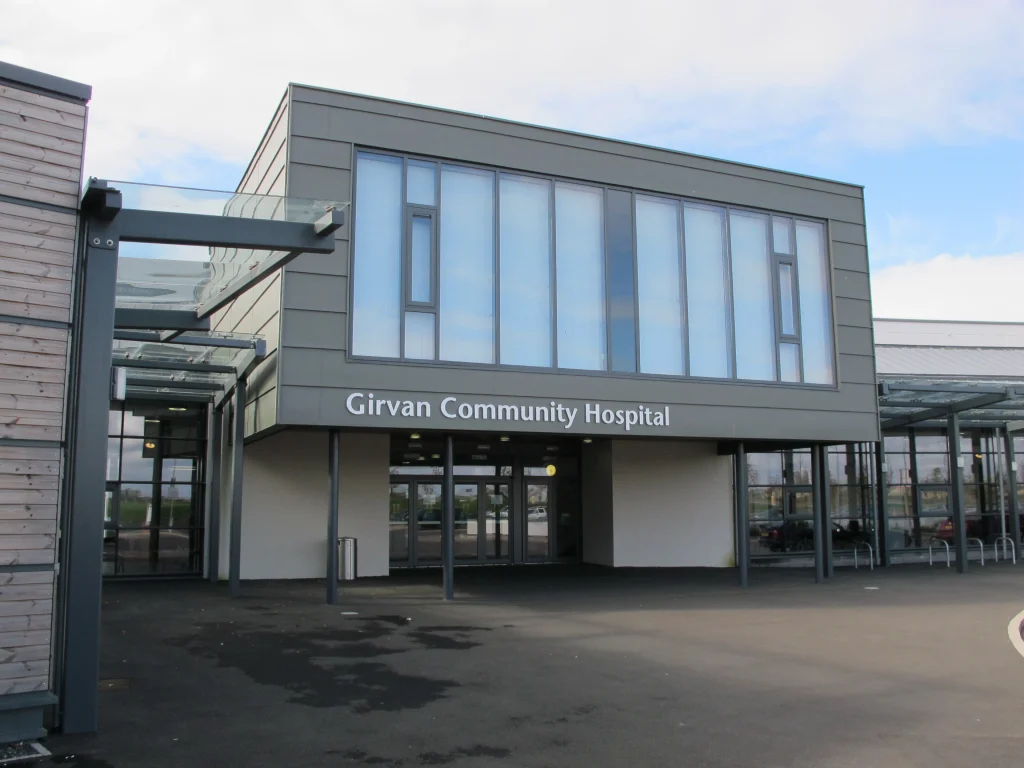
Environmental Considerations and Local Wildlife
Environmental sustainability extended beyond renewable electricity generation.
During the planning process, concerns were raised about the potential impact of the hospital wind turbine on the local bat population. An environmental impact assessment incorporating an ecology study was therefore carried out, with the Royal Society for the Protection of Birds (RSPB) consulted during the process.
According to the original project documentation, the expected impact on bats was considered negligible. The resulting landscape plan was also designed to attract bats away from the turbine while benefiting other existing wildlife.
The hospital’s wider sustainability strategy included a 700 kW biomass boiler using wood pellets and a rainwater collection system used for toilet flushing.
Girvan Community Hospital has also been recognised in NHSScotland reporting as a best-practice example of sustainable healthcare infrastructure.
Results: Up to 66% of Energy Demand Offset
The Girvan installation demonstrates the potential of wind energy for healthcare facilities with suitable wind resources.
The NPS 100-21 produces an estimated average of:
- 200,000 kWh of electricity per year
- Up to 66% of the hospital’s energy demand offset
- 108 tonnes of CO₂ offset per year
- 5 m/s average wind speed at hub height
- 3 m/s turbine cut-in wind speed
At the electricity price used in the original project assessment — 11p per kWh — the project was expected to deliver significant savings on purchased electricity. The original assessment indicated that the project was on course for a payback period of approximately 6.3 years.
Generating electricity directly on site also provided greater protection against volatile electricity prices over the expected 20+ year operational life considered in the original project assessment.

Reliable Wind Technology for Healthcare Facilities
For healthcare facilities, renewable energy technology needs to combine environmental performance with dependable operation.
The NPS 100-21’s Permanent Magnet Direct Drive architecture was designed to minimise maintenance requirements while supporting reliable electricity generation. For Girvan Community Hospital, this meant renewable electricity could be generated on site without distracting from the facility’s primary mission: delivering healthcare services to the local community.
As Alastair Kay, Energy Manager at NHS Ayrshire and Arran, explained:
“The NPS 100 wind turbine provides two thirds of the hospital’s energy demand. Our efforts to use more renewable energy on site is supported by the local community.”
The project illustrates how renewable energy for hospitals can become part of a broader sustainability strategy combining on-site generation, efficient building design and responsible use of natural resources.
Wind Energy for Healthcare: A Proven Application
Girvan Community Hospital provides a real-world example of how distributed wind generation can support energy-intensive public infrastructure.
With approximately 200,000 kWh of annual wind generation, up to 66% of energy demand offset and an estimated 108 tonnes of CO₂ offset each year, the project demonstrates the role that on-site wind power can play in reducing purchased electricity and supporting long-term sustainability objectives.
For hospitals, healthcare campuses and other energy-intensive facilities with suitable wind resources, on-site wind power for hospitals and schools can provide a practical route to increasing renewable generation.
Explore Wind Energy Solutions for Healthcare Facilities
Looking to reduce electricity costs and increase on-site renewable generation at a hospital or healthcare facility?
Contact Northern Power Systems to discuss your site and evaluate whether a 100 kW wind turbine could support your energy strategy.